Warehouse Operations
Alex
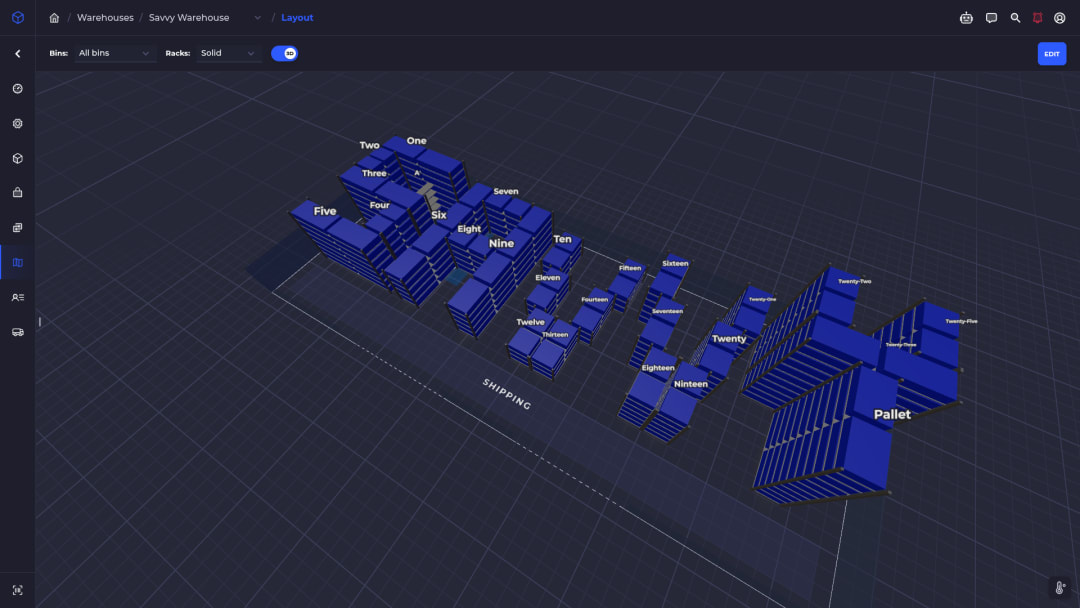
Warehouse operations are the daily work that turns inbound stock into shipped orders: receive it, put it away, pick it, pack it, ship it and keep the counts honest. Job boards list titles. Textbooks list processes. On a Shopify warehouse floor, operations are that loop — and they only work when every unit has a bin home someone can scan.
We build SKUSavvy, a mobile warehouse management system for eCommerce sellers, so this guide is written from the floor. For the full product picture, see our warehouse management software overview.
What Warehouse Operations Are
Warehouse operations are not a department name on an org chart. They are the sequence of moves that change where inventory sits and what the customer receives.
Inbound stock lands on a dock. Someone counts it against the PO or ASN and puts it into a bin. Orders pull that stock back out along a pick path. Pack checks the units, chooses packaging and prints the label. Carriers take the carton. Counts get corrected when something does not match.
If any step skips a scan or a bin, the next step guesses. Guessing is how mis-ships and phantom inventory start.
The 5 Main Activities in a Warehouse
People ask for the "5 main activities." On a working ecommerce floor they look like this:
Receiving. Confirm what arrived. Scan units or cases into the system against what you expected.
Put-away. Move received stock to a bin home. The bin is the address the next picker will trust.
Storage and inventory control. Know on-hand by location, not just by warehouse. Cycle counts catch drift without shutting the building down.
Order fulfillment (pick, pack, ship). Walk a route, pull units, scan-check at pack, buy the label, hand off to the carrier.
Returns and exceptions. Inspect returns, restock or quarantine, and fix short-picks and damages so the next order is not wrong.
Some guides split picking and shipping into separate top-level activities. Fine. The point is the same: each step should leave a record the next step can trust.
Warehouse Types You’ll Actually Meet
Classic lists name seven warehouse types (distribution, cold storage, bonded, and so on). For a Shopify brand, the useful set is smaller:
| Type | What it’s for |
|---|---|
Own ecommerce warehouse / stockroom | You pick, pack and ship your own orders |
3PL / fulfillment center | A partner stores your stock and ships for you |
Retail backroom + DC | Stores plus a central warehouse feeding them |
Wholesale / B2B dock | Case and pallet outbound more than single-unit DTC |
Returns / reverse area | Often a zone inside one of the above, not a separate building |
You do not need all seven labels to run good warehouse operations. You need clear bin homes, a pick path and a pack check that matches what Shopify thinks you sold.
What People Do in Warehouse Jobs
Warehouse jobs map onto the loop, not onto a vanity title list.
Receivers and unloaders get freight onto the floor and into counts.
Put-away and stockers assign bin homes so pickers are not hunting.
Pickers walk routes and pull units for orders or batches.
Packers scan-check, package, print and stage for carrier pickup.
Leads and supervisors clear exceptions, rebalance labor and watch the day’s volume.
Inventory and cycle counters keep locations honest between full physicals.
A warehouse associate usually does more than one of these in a small brand. The software should follow the person across those jobs on a phone or tablet, not lock each role to a desktop terminal.
Skills That Matter on the Floor
The five skills that actually move orders:
Scan discipline. Scan the unit and the bin when the process asks. Skipping “just this once” is how counts rot.
Spatial memory and following a path. Knowing the building helps; following a planned route helps more when SKU count grows.
Exception judgment. Short-picks, damaged goods and wrong variants need a human decision, not a silent workaround.
Packaging sense. Right box, right void fill, label on the correct carton.
Clear handoffs. When a batch or dock appointment changes, the next person needs the system state, not a verbal maybe.
Training should teach the loop and the scans, not only the job title.
Layout and Bin Homes
Operations fall apart when layout and software disagree. Aisles that look neat on a whiteboard still waste walking if fast movers sit in the back. Bin labels that do not match the system force guesswork.
Map the building, give every active location a barcode, and put A-movers on short paths. For practical layout fixes, see how to optimize warehouse layout. For a digital twin of the shelves, see 3D warehouse mapping.
Features and Benefits
How SKUSavvy runs warehouse operations for Shopify sellers:
| Feature | Benefit on the floor |
|---|---|
Bin-level inventory on a 3D map | Everyone sees the same bin home; less “I thought it was in A12” |
Scan-based receiving and put-away | Inbound stock lands in a real location, not a warehouse-only bucket |
Pick routes by walking path | Non-lot picks follow the shortest route through your bins, not oldest-first. Lot-tracked stock can pick expiry-first when you turn that on |
Pack scans and packaging suggestions from item dimensions and configured boxes | With pack scans enabled, SKUSavvy flags a scanned item that does not match the order before shipping |
Cycle counting on a phone | Fix drift in slices instead of freezing the building for a full physical |
Kept in sync with your Shopify store | Shopify receives available stock quantities from SKUSavvy |
Unlimited seats on a PWA | Add seasonal labor without buying another desktop license; runs in the browser on phone or tablet |
Using Savvy Bot on the Floor
Savvy Bot is SKUSavvy’s AI assistant. It can pull live account context and draft reports so a lead can ask what is short, what moved yesterday or which bins need a count — without exporting spreadsheets first. It does not walk the aisle for you. Edits stay off unless you turn them on and approve them, and answers use AI credits. The floor still decides which SKU to prioritize and which exception to accept.
FAQ
Warehouse Operations FAQ
What Are the 7 Types of Warehouses?
Textbooks list many (distribution, cold, bonded, hazmat, and so on). For ecommerce brands, the practical set is own warehouse, 3PL fulfillment, retail plus DC, wholesale dock and a returns zone. Pick the operating model; don’t memorize all seven labels.
What Do They Do in Warehouse Jobs?
Receive, put away, pick, pack, ship, count and clear exceptions. Titles vary; the loop does not.
What Are the 5 Main Activities in a Warehouse?
Receiving, put-away, inventory control, fulfillment (pick, pack, ship) and returns or exceptions.
What Are the 5 Key Skills of a Warehouse Worker?
Scan discipline, following a path, exception judgment, packaging sense and clear handoffs.
Is Warehouse Operations the Same as Warehouse Management?
Operations are the daily floor work. Warehouse management is how you plan, staff and systemize that work. A WMS is the system layer.
Keep Reading
Warehouse Management Software
Mobile WMS for Shopify sellers: bins, picks, packs and counts kept in sync with your store.
See WMSOptimize Warehouse Layout
Eight layout fixes that cut walking and make pick paths shorter.
Read layout guideRun the Floor Loop on a Phone Your Team Already Has
Start a 30-day trial or check pricing for your order volume.