What Are Fulfillment Centers, and When Should You Use One?
Alex
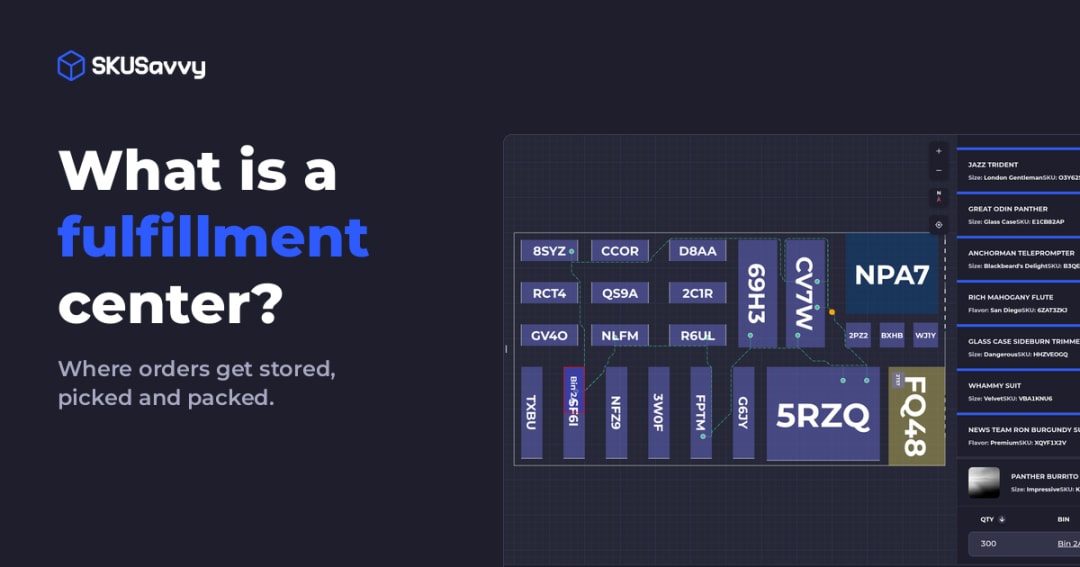
Fulfillment centers are warehouses built to ship online orders. You send them your stock, and when a customer orders, their team picks the items off the shelf, packs the box, buys the label and hands it to the carrier. Most are run by third-party logistics companies (3PLs) that do this for many brands at once and charge you per order, per item and per month of storage.
We build SKUSavvy, a mobile warehouse management system for eCommerce sellers and 3PLs, so this explainer is written from the floor. It covers how a fulfillment center works, how it differs from a warehouse or a distribution center, what it costs, and how to decide between outsourcing and shipping from your own shelves. For more guides like this, browse our warehouse and fulfillment blog.
What a Fulfillment Center Does, Step by Step
Every fulfillment center runs the same loop. The names change between providers, but the work doesn't.
Receiving. Your supplier or you send stock in. The center counts it against what you said was coming and puts it away.
Storage. Each item gets a location: a shelf, a bin or a pallet spot. Good centers know the exact bin, not just the aisle.
Order intake. Your store sends each new order to the center's system, usually through an app or integration.
Picking. A picker walks the shelves with a list or a scanner and pulls the items for one order or a batch of orders.
Packing. Items get checked, boxed with the right packaging and inserts, and weighed.
Shipping. The center buys the label, the carrier picks up, and tracking flows back to your store.
Returns. Returned items get inspected and either put back into stock or set aside.
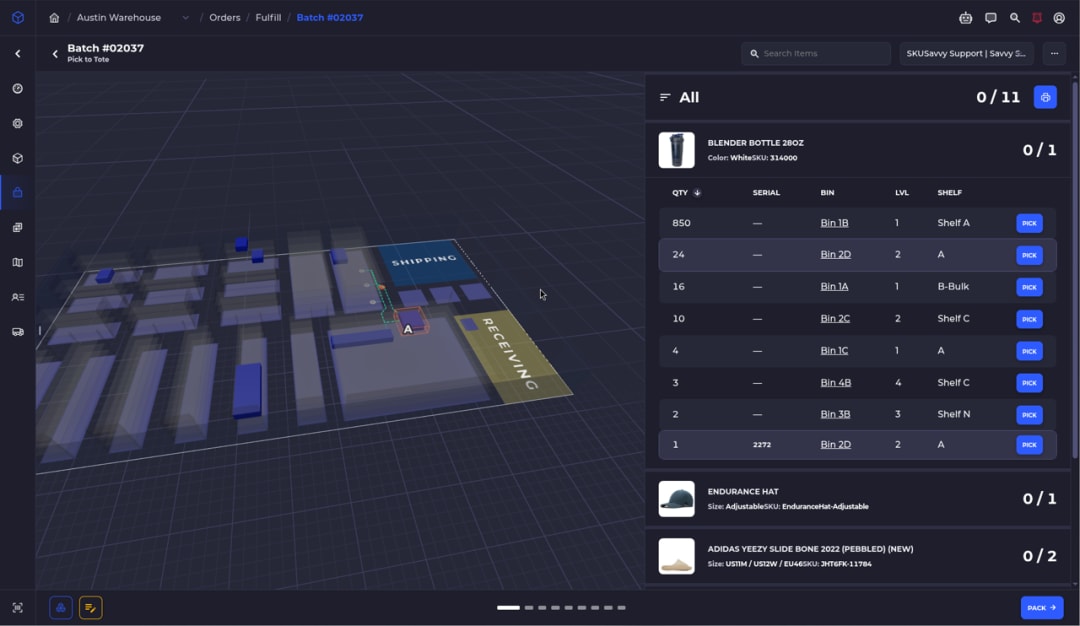
The quality of a fulfillment center lives in steps 2 and 4. If stock isn't tracked by location, pickers search, orders ship late and counts drift. When you tour one, ask how they know where a given unit is right now, and watch a picker do it.
Fulfillment Center vs Warehouse vs Distribution Center
People use these words loosely, and the line between them is blurry. The useful difference is who the building ships to and how often stock moves.
| Type | Ships to | What it's built for |
|---|---|---|
Fulfillment center | Individual customers (direct to consumer) | Many small orders a day: pick, pack, ship and returns |
Warehouse | Anyone, or no one yet | Storing stock safely, often for longer periods |
Distribution center | Stores, wholesalers and other warehouses | Moving cases and pallets quickly, often cross-docked |
A lot of eCommerce brands run something in between: a warehouse of their own that ships direct to customers. That's a fulfillment center in everything but name, and it needs the same things a 3PL has: stock by bin, a pick list and a packing check.
What Are Amazon Fulfillment Centers?
Amazon fulfillment centers are the warehouses Amazon runs for its own retail business and for sellers who use Fulfillment by Amazon (FBA). Sellers ship stock in, and Amazon stores it, ships Amazon orders and handles those returns. It's a fulfillment center in the plain sense, with one big difference: it's built around orders placed on Amazon. If most of your sales come from your own store, you'll usually want a center or a setup that works with that store first.
Types of Fulfillment Centers
Third-party (3PL) fulfillment: an outside company stores and ships for many brands. The most common choice for growing online stores.
Marketplace fulfillment: run by a sales channel, like Amazon's, for orders on that channel.
In-house fulfillment: your own team ships from your own space, from a garage to a full warehouse.
Specialized centers: cold storage, oversized items, hazmat or high-value goods that need extra handling.
How Much Does a Fulfillment Center Cost?
3PL fulfillment centers price by activity, so the bill moves with your order volume. Rates vary widely by region, product size and volume, so treat any number online as a starting point and ask for a quote with your own order profile.
| Fee | What it covers | How it's usually charged |
|---|---|---|
Receiving | Counting and putting away inbound stock | Per hour, per carton or per pallet |
Storage | Shelf, bin or pallet space | Per bin, per pallet or per cubic foot, per month |
Pick and pack | Pulling items and packing the order | Per order, plus per extra item |
Packaging | Boxes, mailers, fill and inserts | Per item used, or included in pick and pack |
Shipping | The carrier label | Carrier cost, sometimes with a markup |
Value-added services | Kitting, labeling, gift notes, returns | Per task or per hour |
Setup and minimums | Onboarding and a monthly floor | One-time fee and a monthly minimum |
Ask for the full rate card, not just the pick fee. The surprises are usually in minimums, storage on slow sellers and per-task charges for work you assumed was included.
Should You Use a Fulfillment Center or Ship In-House?
Outsourcing makes sense when shipping is eating time you'd rather spend on product and sales, when you need faster delivery to a region you can't reach from one spot, or when your volume swings more than you can staff for. You trade control for capacity: someone else's team decides how carefully your boxes get packed.
Shipping in-house makes sense when packaging and quality are part of the product, when your items are awkward or fragile, or when your margin can't carry per-order fees. Plenty of brands do both: in-house for the core catalog, a 3PL for overflow or a second region.
Either way, the hard part is the same. You need to know what's on each shelf, ship the right item, and keep your store's stock numbers honest. That's what a warehouse management system (WMS) is for.
Features and Benefits: Running Your Own Fulfillment With SKUSavvy
SKUSavvy runs the fulfillment loop above for brands that ship from their own shelves and for 3PLs that ship for clients. See how mobile order fulfillment works on a phone or scanner.
| Feature | What it does on the floor |
|---|---|
Stock by bin | On-hand quantity for every item in every bin, so pickers know which shelf, not just how many |
Kept in sync with your Shopify store | New orders land in the queue as they're placed, and stock changes push to Shopify |
On hand vs available | Available is on hand minus what's committed to orders, and that's the number Shopify gets |
Pick order | Lot-tracked stock picks the soonest-expiring lots first |
Barcodes and labels | Import the bin barcodes you already use; print product labels at 2x1, 4x2, 4x4, 4x6 or a custom size |
Kits | Shopify shows how many kits you can build from what's on the shelf |
Phones, tablets and scanners | Runs in the browser as a progressive web app; scan with the camera or a Bluetooth or USB scanner |
If You Run a 3PL Fulfillment Center
SKUSavvy's 3PL billing and client portal turns your warehouse activity into charges on each client's rate card, so receiving, storage and pick fees come from real warehouse events instead of a spreadsheet at month end. Clients log into their own portal to see their stock and orders.
Using Savvy Bot in the Warehouse
Savvy Bot is the AI assistant inside SKUSavvy, and it works from your live account data. Ask how many units of a SKU are on hand, which items are running low, or for a report like your top sellers this month, and it answers with a table or chart, or opens the right page. It reads and explains. It doesn't change anything unless you turn on edits and approve each one, and it uses AI credits. The picking and packing stay human.
Fulfillment Centers FAQ
What Does Fulfillment Mean?
Fulfillment is everything that happens between a customer placing an order and that order arriving: picking it, packing it, shipping it and handling any return.
Can You Give an Example of a Fulfillment Center?
An Amazon FBA warehouse is the best-known example. A 3PL that stores stock for dozens of online brands and ships their orders is another. So is a brand's own warehouse that ships direct to customers.
Is a Fulfillment Center the Same as a 3PL?
Not quite. A 3PL is the company; a fulfillment center is the building and operation. Most 3PLs run one or more fulfillment centers, and some brands run their own without a 3PL.
How Do I Choose a Fulfillment Center?
Check that it integrates with your store, ask for the full rate card and minimums, visit or ask how they track stock by location, and ask for their order accuracy and same-day cutoff time.
Does SKUSavvy Work With Shopify?
Yes. You install it from the Shopify App Store, and your products, orders and locations come across. After that, your warehouse is kept in sync with your Shopify store.
Keep Reading
Mobile Order Fulfillment
Pick, pack and ship from a phone or scanner, with orders kept in sync with your Shopify store.
See fulfillment3PL Billing and Client Portal
Bill clients from real warehouse events, with rate cards and a client portal.
See 3PL featuresRun Your Own Fulfillment by Bin, Kept in Sync With Shopify
Start a 30-day trial or check pricing for your order volume.