ShipStation vs SKUSavvy
Shipping software with inventory features, or a full Shopify WMS with shipping built in.
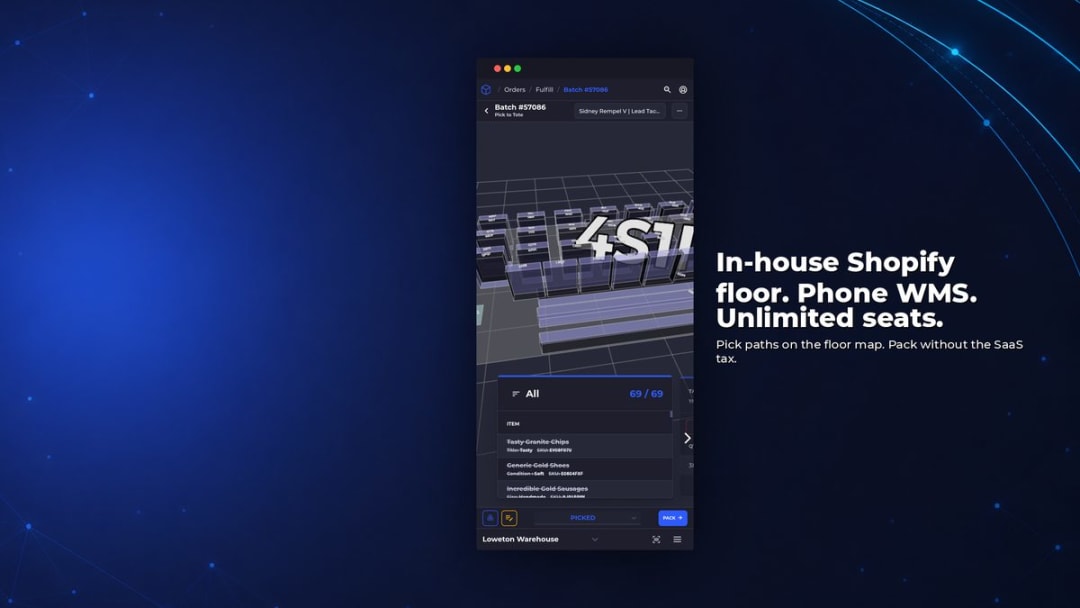
ShipStation is shipping software. It prints labels across carriers and adds inventory features, such as bin locations, lot tracking and mobile picking, as you move up its plans. SKUSavvy is a Shopify warehouse management system (WMS) that includes labels and rate shopping, so the floor and shipping run in one app.
SKUSavvy does not integrate with ShipStation. Teams that move to SKUSavvy move shipping with it.
Last verified: October 2026. Vendors change plans and prices often, so confirm current terms with each vendor before you buy.
ShipStation vs SKUSavvy at a glance
When ShipStation is the better fit
Shipping is the main job and inventory is light: few bins, few SKUs and no purchase orders.
You sell on many marketplaces and want each one connected directly to your shipping tool.
You ship a small number of orders a month. ShipStation starts at $14.99 a month.
Your team wants a native app from the iOS or Android app store.
When SKUSavvy is the better fit
You need purchase orders, receiving, put-away, replenishment and cycle counts without moving to a top plan.
You want pick routes on a 3D map of your warehouse, not only bin names on a pick list.
Your team is larger than 15 people, or grows in peak season. SKUSavvy users are unlimited.
Shopify is your sales engine and you want two-way sync of orders, inventory and fulfillments.
You also fulfill for other brands and need 3PL billing and a client portal.
Plan by plan: what you pay for warehouse features
ShipStation prices by shipments (each label counts, including return labels) and unlocks warehouse features by plan. SKUSavvy has one plan, so every feature in this table comes at every volume.
Can I use SKUSavvy with ShipStation?
No. SKUSavvy has no ShipStation integration. It prints labels and rate shops with your own carrier accounts, so most teams move shipping into SKUSavvy along with picking and packing.
ShipStation strengths and limits
What ShipStation says it does, and where it stops, from its own pages.
Best for: Sellers who mainly need multi-carrier shipping with light inventory tracking.
Strengths
Low entry price and a 30-day trial with no credit card
Mobile app on iOS and Android
Bin locations (area, unit, shelf and bin) that print on packing slips
Lot tracking and bundles on Standard and up
Multi-carrier shipping, its core product
Limits
Purchase orders, scan to receive, forecasting and pick to tote need the Premium plan
No pick route optimization listed
Users capped by plan: 3, 10 or 15
3PL Manager links client accounts, but no 3PL billing is listed
Price rises with every label, including return labels
Starting price: From $14.99/month (Starter, 50 shipments).
SKUSavvy strengths and limits
The same view of SKUSavvy, including what it does not do.
Best for: Shopify brands that pick, pack and ship from their own warehouse.
Strengths
A 3D map of your warehouse that put-away, picking and cycle counts all use
Runs in the browser on any phone or tablet, with the camera or a Bluetooth scanner
Unlimited users, published pricing and a 30-day trial with no credit card
Two-way Shopify sync across multiple stores, including Shopify POS
Lots, expiry dates, serial numbers, kitting, replenishment and cycle counts
Shipping labels and rate shopping with your own carrier accounts
3PL billing with rate cards, invoices and a client portal
Limits
Built around Shopify: other marketplaces connect through Shopify, not directly
No app store app; the app runs in the browser
No native QuickBooks, Xero or NetSuite integration
Migration runs on CSV imports, not a one-click importer from another WMS
Starting price: $179/month, includes the first 250 orders.
Cost at 1,000, 5,000 and 15,000 orders a month
Monthly software cost before postage, from each vendor's published pricing.
SKUSavvy: computed with the calculator on the SKUSavvy pricing page. Every order that enters SKUSavvy counts, including purchase orders, transfers and POS orders.
ShipStation: published plan prices for 1,000, 5,000 and 15,000 shipments a month, paid monthly. Each label, including return labels, counts as a shipment. Purchase orders and pick to tote need Premium. Starter stops at 5,000 shipments.
Carrier postage is extra with every vendor.
How to migrate from ShipStation to SKUSavvy
SKUSavvy imports from CSV files and the Shopify sync. There is no one-click importer from another WMS, so plan a short parallel run.
Pick a cutover window. Choose a slower week and keep ShipStation running while you set up, so orders keep shipping.
Start a trial and connect Shopify. Products, orders and inventory sync both ways. See the Shopify connection guide.
Build your warehouse map. Draw shelves and bins in the layout editor so put-away, picking and counts all use the same map.
Export inventory from ShipStation. Export on-hand quantities by bin location, with lots, expiry dates or serial numbers if you track them, as a CSV file.
Import into SKUSavvy. Import inventory, bin barcodes, kits, vendors and open purchase orders from CSV, then print bin labels.
Connect your carrier accounts and test labels on a few orders.
Count, then cut over. Cycle count your fastest movers, then switch picking and packing to SKUSavvy. Turn off inventory sync from ShipStation to Shopify, so only one system updates stock.
Move shipping last. Connect the same carrier accounts in SKUSavvy, ship a test batch, then cancel ShipStation. ShipStation plans can be cancelled at any time.
Want help? Optional managed implementation costs $2,750 plus $250 a month for support, and covers data imports, the warehouse map, bin labels and the Shopify connection.
More comparisons
Sources
Every claim about another vendor on this page comes from the vendor's own website, help center or app listing, unless a different source is named.
Last verified: October 2026. Vendors change plans and prices often, so confirm current terms with each vendor before you buy.
Try SKUSavvy free for 30 days
No credit card. Connect Shopify, map a few aisles and run real picks before you decide.