Custom Label Creator for Barcode Labels
Learn how to create your own custom labels that dynamically change with information from your orders, products, and customers.
Custom Label Types
Within the SKUSavvy custom label builder you can build out several labels for different purposes. Here are the label types and where they can be printed within the system:
Bin Labels
Each bin within your warehouse layout is automatically assigned a barcode. This label will provide you a way to insert images, shelf name, level, bin name, barcode and custom text.

This label can be printed anywhere you can print a single bin, the list of bins, or printing all the bins on a shelf.
Product Labels
The item label allows you to use information from your products and variant details such as SKU, image, meta fields, price, barcode and more.

This label is printable by going into a product variant and selecting print on the barcode then selecting your new custom label.
PO Check-in
These labels can be used similarly to a product label in that you can add all product details, lot information, meta fields, and images.

This label is only available once a product has been counted and checked-in to SKUSavvy from a purchase order or transfers.
Transfer Labels
Include any sort of information needed on the receiving side of a transfer including name, barcode, meta fields, lot information and more.

This label is only available once a product has been counted and checked-in to SKUSavvy from a purchase order or transfers.
Shipping Label
Shipment barcodes are created using the information from an order to create your own custom shipping labels with information such as address, notes, order ID, shipment barcode and meta fields.

You print it instead of a carrier label by turning on 'Use Custom Labels' in a fulfillment batch's settings. It prints one label for each box in the shipment.
Order Pickup Label
This label is available to print for online orders being picked up at your warehouse or store location. It is printed at the time of order fulfillment within SKUSavvy and can be scanned to indicate an order has been picked up by your customer. This will also update to Shopify.
Purchase Order Template
A fully customizable purchase order template to include PO contents, weight, vendor information, shipping information, delivery date, meta fields and beyond. This can have a default template though you can utilize different templates.
Packing Slip
Edit the packing slip to include details of the order, pricing and discount information as well as shipping information. Available to print after packaging an order.
Action Barcodes
Action barcodes are a special type of label that when scanned enable SKUSavvy to take certain actions such as printing a shipping label or packing slip, selecting a specific box size, moving through the batch, or to split fulfillment.
Create a Label
To create your label click on 'Create' and select the label type you plan to make as well as the paper size for the label. Labels can be 4" x 2", 4" x 4", 4" x 6", 2" x 1" or a custom size. Packing slips are 4" x 6" or letter size, and purchase orders, pick sheets and transfer manifests are letter size. The size sets the editor preview; the printed size comes from the paper chosen in the print dialog, so match your label stock to it.Go to Label Editor
1) Enter the name for your label
2) Select the label type
3) Select the paper size for your label or create your own custom label size
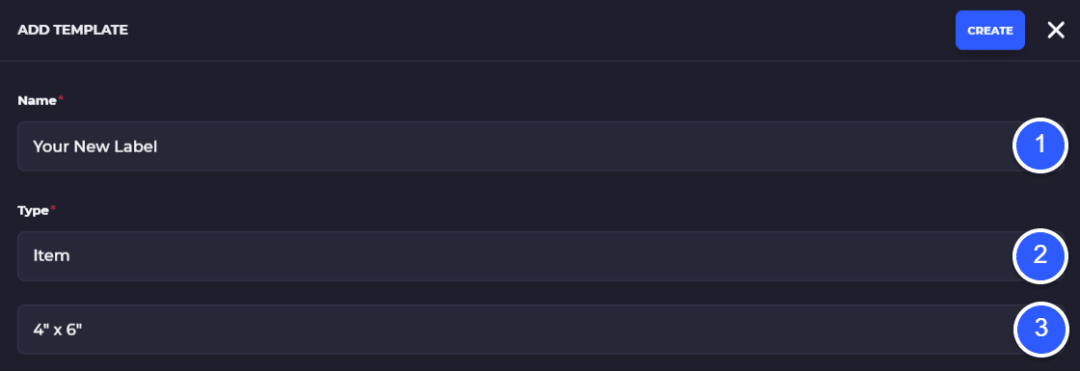
Label Editor
We used our own internal content management system to introduce the easiest barcode label editor. Using the label creator tool will help you come up with customized label formats that use a combination of your text and contextual details from the order, product, and batch. To start using the your new labels open the shipping label creator located in your configuration settings.Go to Label Creator
Go to company dashboard
Select 'Templates'
Label Editor Interface
Getting used to the label editor interface is pretty quick and simple using blocks and relevant parameters for each block type so you can assemble the label you need.
Select page dimensions or set your own custom dimensions. Add padding to the label edge
View sections of your template
Add a block to the editor, note the available blocks depending on the type of label selected
Once a block is selected you can copy the entire block. Using the 'Spacing' block enables you to create reusable blocks easiest
Select the arrow to go into a block, or hover over the label to select a block to edit
Click an the grid icon to drag and drop a block position, or nest it within another nestable block. Hold on the arrow at the top of the block list to move the block out of its current position
Visual representation of your label
Print preview window
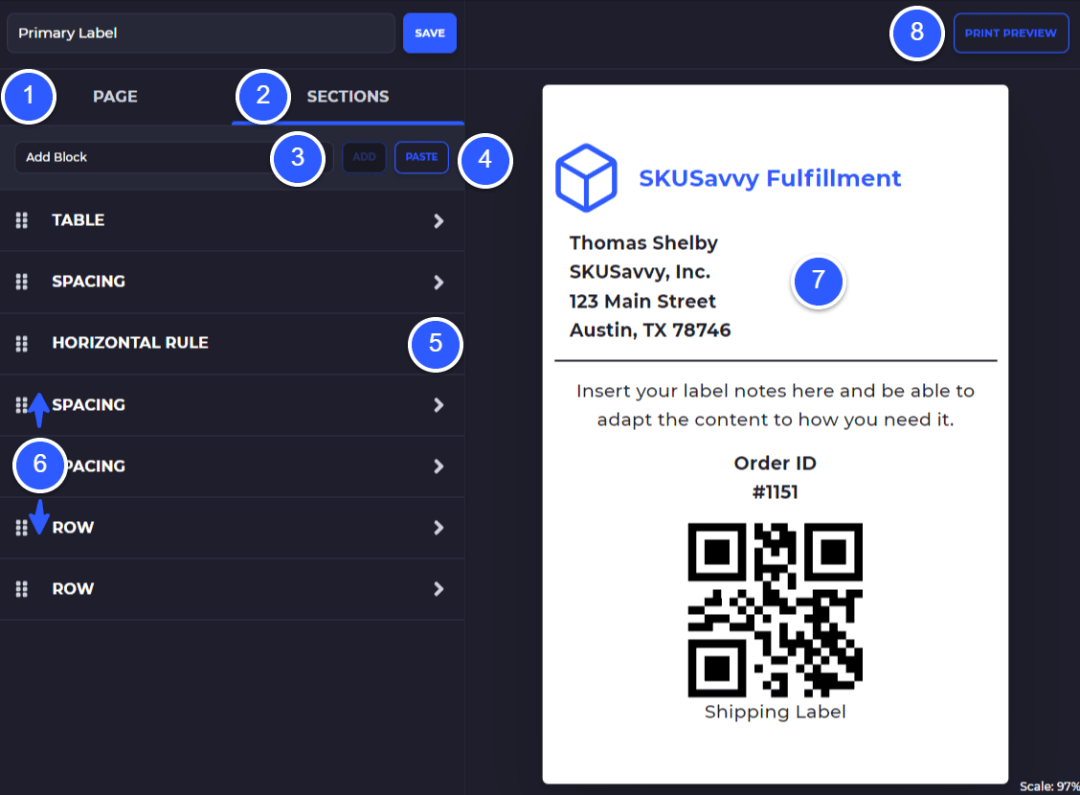
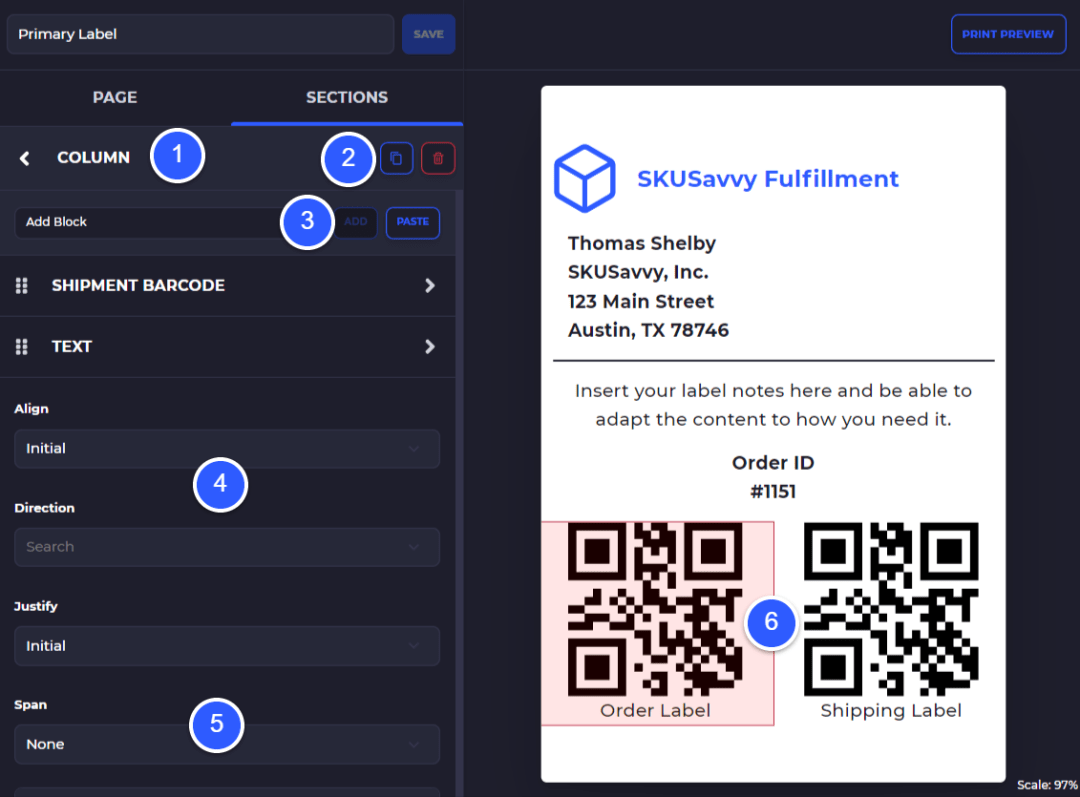
Block Detail
When you click into a block available parameters for the block will show that may include text styling, padding/margin, spacing, and more. Click on a single block to view that blocks available inputs.
Current block being edited
Copy this block to paste into another
Select more blocks to add to the current block
View editable elements of the block, in this case for the column we can set the alignment and direction, justify elements left/right/center, breakpoints on different screen sizes
Select from available options to set the column span in this case
The highlighted block is currently being edited
Available Blocks: Structure
Below are the structure components, which arrange the other blocks on every label type
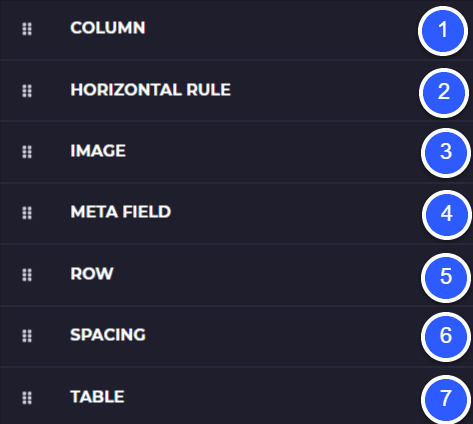
* Indicates the block accepts child blocks
*Column: place two or more objects next to each other on a label
Horizontal Rule: place a line across the page of varying thickness
Image: place and resize an image
Meta Field: add relevant dynamic content from metafields in your account
*Row: used to add multiple columns on one line
*Spacing: add spacing or place several objects inside this element to copy/paste
*Table: insert a table then add objects to the table
Available Blocks: Shipments
Below are all the blocks that can be inserted into your shipping label design and whether or not that block accepts child blocks.
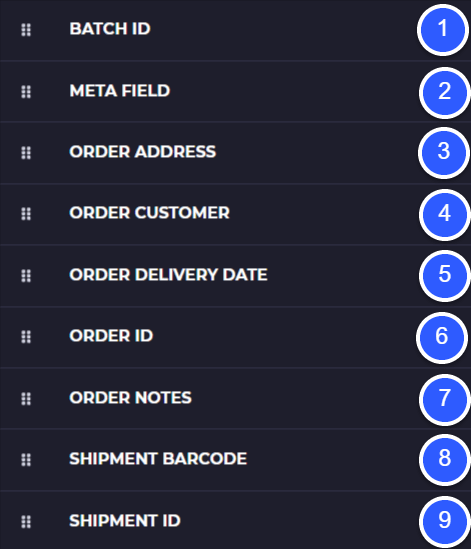
Batch ID: prints the pick batch ID associated with the shipment label
Box Number: prints the box's position in the shipment, such as "Box 3 of 10", because one label prints for each box. Hidden on single-box shipments unless you turn off Multi Box Only; turn off Show Total to print only the number
Meta field: add dynamic content from meta fields on products, orders, vendors,
Order address: will insert the customer address of an order during shipping
Order customer: inserts the customer information from the order
Order delivery date: inserts the delivery date of an order if available
Order ID: inserts the ID of an order being shipped
Order notes: inserts any note associated with an order
Shipment barcode: insert a barcode associated with the order shipment (adopts format of your account default barcodes)
Shipment Id: Inserts the shipment number for orders that have multiple shipments
Available Blocks: Bin
Below are components that can be used and customized to build your own custom bin labels
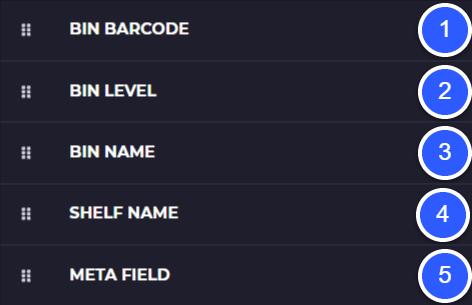
Bin Barcode: generates and shows a barcode for the corresponding bin(s) you are printing
Bin Level: level of the bin in the warehouse
Bin Name: name of the bin being printed
Shelf Name: shelf containing the bin being printed
Meta field: insert dynamic bin meta fields
Available Blocks: Product
Below are components that can be used and customized to build your own product labels
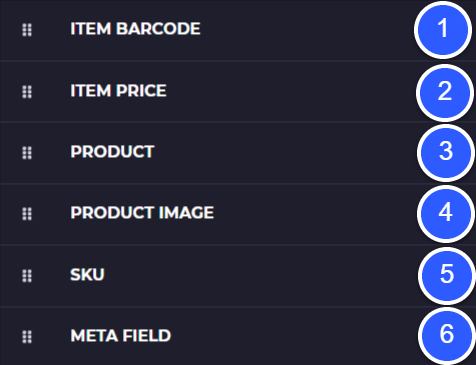
Item Barcode: generates and shows a barcode for the corresponding product(s) you are printing
Item Price: add the retail price to your barcode label
Product Name: name of the product being printed
Product Image: adds the image of your product to the label
SKU: inserts the SKU of the product on the label
Meta field: insert dynamic product meta fields
Available Blocks: PO Check-In
Below are components that can be used and customized to build your own purchase order check-in labels
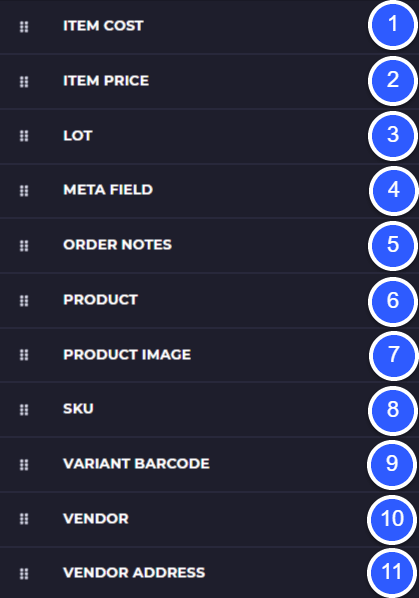
Item Cost: the cost of the product at the time the PO was placed
Item Price: the retail price of the product
Lot Number: displays the lot number and expiration date assigned to the product during check-in
Meta Field: insert dynamic content related to the PO, vendor, or product
Order Notes: insert notes on the PO
Product: insert product name
Product Image: show your product photo on the check-in label
SKU: insert just the SKU for a product
Variant Barcode: inserts the barcode (you may need different check-in labels for different barcode types)
Vendor: insert the vendor name
Vendor Address: insert the vendors shipping address
Available Blocks: Transfer Check-In
Below are components that can be used and customized to build your own transfer check-in labels
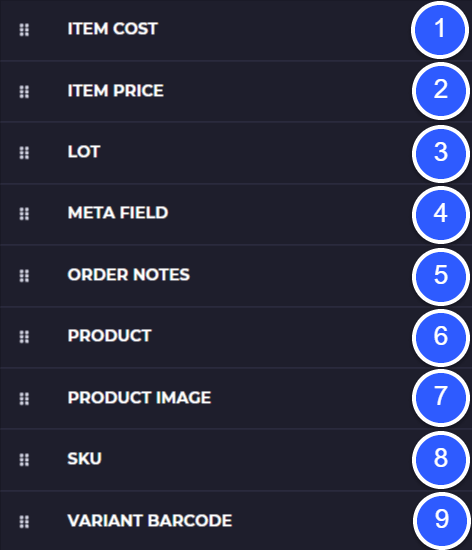
Item Cost: the cost of the product at the time the transfer was placed
Item Price: the retail price of the product
Lot Number: displays the lot number and expiration date assigned to the product during transfer check-in
Meta Field: insert dynamic content related to the PO, vendor, or product
Order Notes: insert notes from the transfer
Product: insert product name
Product Image: show your product photo on the transfer check-in label
SKU: insert just the SKU for a product
Variant Barcode: inserts the barcode (you may need different check-in labels for different barcode types)
Available Blocks: Purchase Order Template
Below are components that can be used and customized to build your own purchase order template. There is already a default PO template that will be used in place of your own custom template if you have not created a new one.
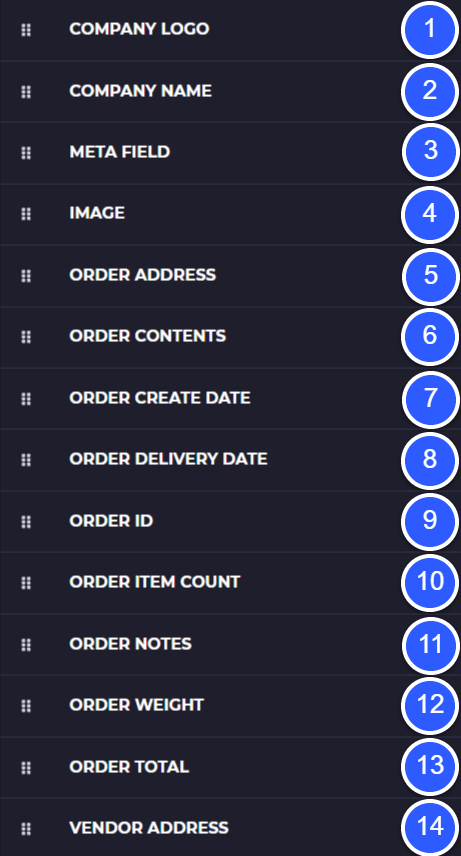
Company Logo: insert your company logo into the PO
Company Name: insert your company name on the PO template
Meta Field: add meta fields across products customers, order, bins and more
Image: add an image to the PO
Order Address: you can add the delivery address to your warehouse
Order Contents: insert a table of items on the order, customize the table elements
Order Create Date: date of order creation
Order Delivery Date: insert the preferred delivery date on the order
Order ID: insert the purchase order ID from the system
Order Item Count: counts all quantities in the order to provide a total
Order Notes: insert notes from your team on the PO
Order Weight: totals all item weights within the order
Order Total: insert the total cost of all products on the order
Vendor Address: Add the vendors addres to the PO template
Available Blocks: Action Barcodes
Use these different types of action barcode to make actions within SKUSavvy by simply scanning the barcode.
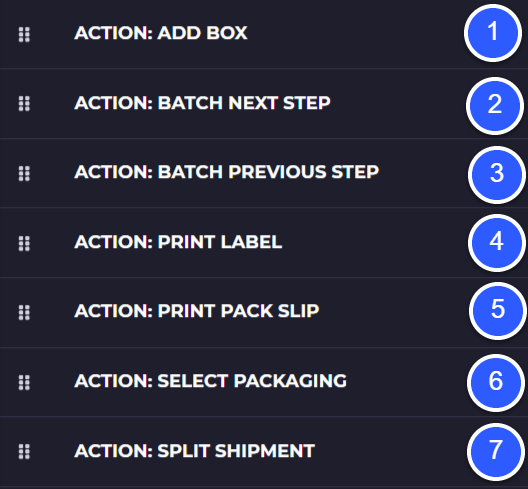
Add Box: during fulfillment this will add a new box so you can ship in multiple boxes for one shipment
Advance through the batch steps during fulfillment
Go back to previous step during fulfillment
Print the shipping label once purchased
Print your packing slip
Select a specific box size during fulfillment
Split the shipment
Print Your Labels
Once a template is saved, you choose it on the screen where that label prints. The printing guide covers each one: custom shipping labels with one label per box, packing slips, pickup labels, bin labels, product barcodes, check-in labels and action barcodes. It also covers printer and paper setup, which settings are saved on each device, and printing without the print dialog.
For a comparison / alternatives take on inventory label maker, see best inventory label maker.
Printing Custom Meta Fields
You can use meta fields from SKUSavvy on any of the appropriate labels. For instance meta fields can be applied to products, product variants, vendors, orders, lots, customers. These meta fields can contain a name, data type, and value which can then be utilized to pull this dynamic information for any of the label types you have created.
Below is a list of data elements that accept meta fields:
Product
Product variant
Vendor
Customer
Order
Purchase order
Transfer order
Bin
Add Meta Fields First
To use meta fields within a custom label you need to have already added the data to it's relevant source. Look for the meta fields anywhere you see this dialog:

Add Meta Field to Label
Within the label builder select from the dropdown the meta field attribute and add it to your label. Once added you should click into this and choose which type of meta field (product, variant, customer, etc.) and the data to show.

Select the meta field attributes to add them to the label builder.
1) Select meta field type
2) Select the data field you want available for the selected meta field type (must have already added this data on the meta fields directly for it to show)
3) Add a prefix for your meta field
